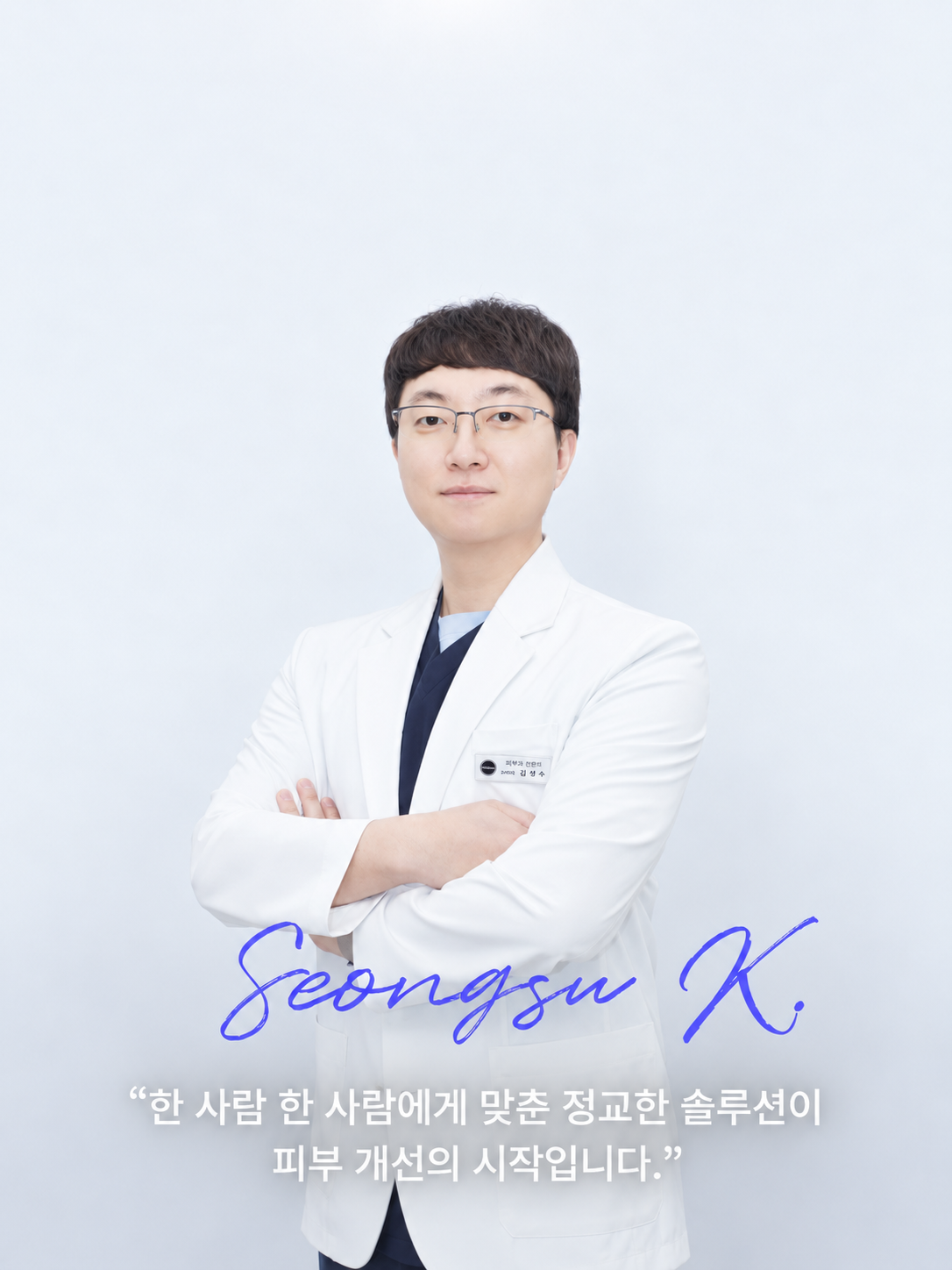
Introducing the charismatic Medical Director of TATOA Clinic Ansan, Dr. Kim Seong-su.
Hello.
This is TATOA Clinic Ansan.
Today we would like to introduce
our medical director, Dr. Kim Seong-su.
Through 15 questions,
we will get to know
Dr. Kim Seong-su, our medical director,
in more detail.
1. What first interested you in aesthetic skin care?
Initially, I focused on treating skin diseases, but gradually became interested in how aesthetic care
can make positive changes in patients' lives.
For example, it was very rewarding to see a patient who had struggled socially because of acne
regain confidence after treatment and become active in social life.
I believe aesthetic skin care is an important field that can have a positive impact
on a patient's whole life, beyond changes in appearance.
2. What do you think makes a good doctor?
I think a good doctor listens carefully to the patient's story, understands their concerns
and proposes the most appropriate treatment.
For example, if someone comes in with a vague wish for a lighter complexion,
it is important not simply to recommend brightening procedures, but to consider their skin
and explain realistic alternatives.
I believe we should be partners who think about patients' skin health with them, rather than simply providers of procedures.
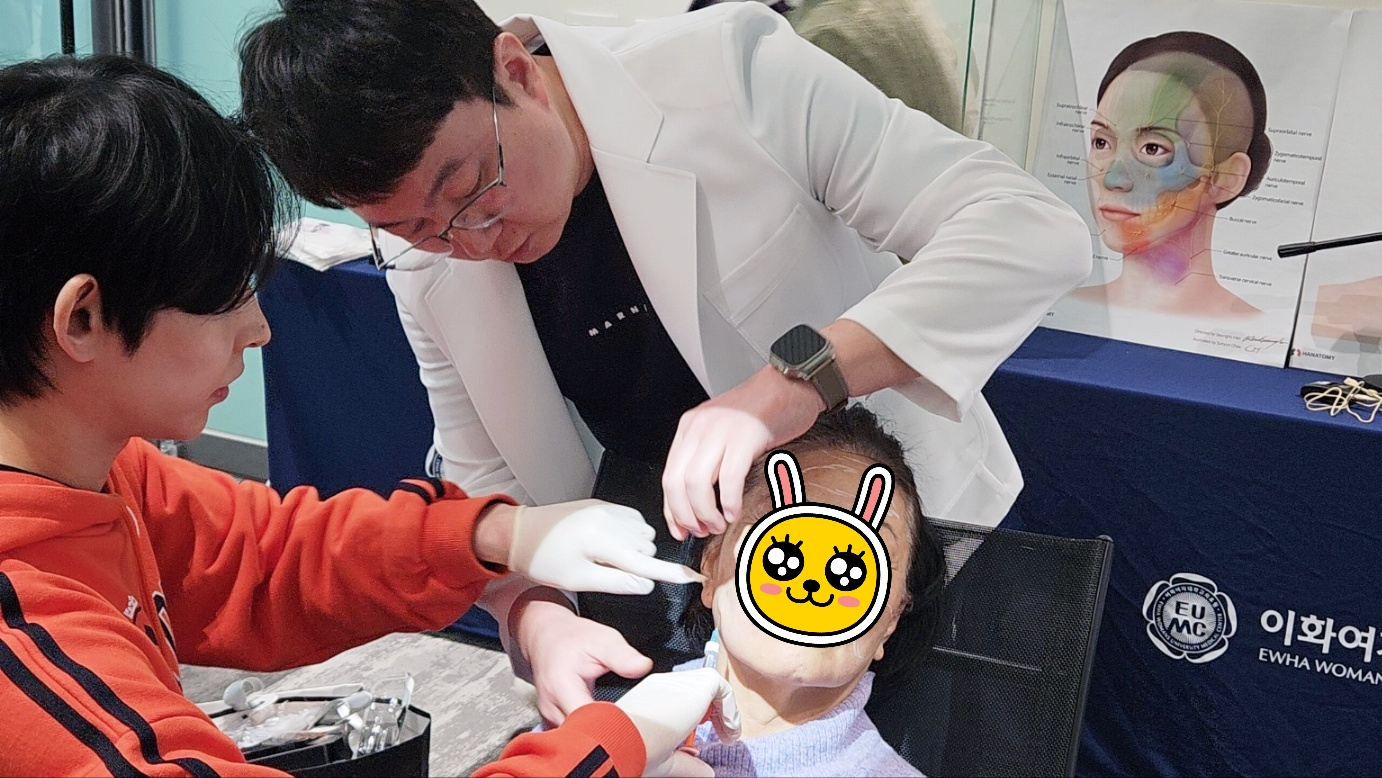
3. What principle matters most to you in aesthetic skin care?
My most important principle is that every procedure should be in harmony with the patient's skin.
Even a popular procedure is not suitable for everyone and may produce an unnatural appearance.
I therefore consider skin condition, facial structure and lifestyle together
and make personalized treatment my guiding principle.
4. What matters most in your relationship with patients?
Above all, trust matters most. Once, a patient came to me after visiting several clinics
because of side effects from a previous treatment.
After building trust through several consultations, we were able to complete treatment successfully.
Seeing that patient continue to return reminded me once again how important trust is.
5. How do you view improving patients' quality of life?
I see dermatologic care as a process that improves quality of life, not merely appearance.
For example, a job seeker preparing for an interview once came in worried about skin problems
and regained confidence after treatment.
I believe our role is to help patients recover inner confidence as well as see outward changes,
so they can live better lives.
6. Which patients do you find challenging, and how do you approach them?
Some patients come with unrealistic expectations, such as expecting
dramatic changes from a single procedure or requesting treatment without considering their skin condition.
In those cases, instead of automatically proceeding, I think it is important to use a thorough consultation to set realistic goals
and guide the patient toward the most suitable approach.
7. What matters most when communicating with patients?
Listening carefully and providing accurate, honest information are most important.
Trust grows when we address patients' worries and questions fully.
Medical explanations can be difficult to understand, so communicating clearly is also essential.
8. What do you focus on during the first consultation?
At the first consultation, it is important to assess the patient's skin accurately
and align their desired improvements with realistic expectations.
For example, when someone requests brightening treatment, rather than focusing simply on lighter skin,
I suggest a personalized approach to improving a healthy, even skin tone.
Helping patients understand their skin correctly and find the most appropriate treatment
is the most important part of a first consultation.
9. What do you personally do to provide the most satisfying service?
I continually study new medical technologies and treatment methods
to offer patients the most effective care I can.
I also pay close attention to each individual
and aim to provide care that considers long-term skin health, beyond the procedure itself.
I believe these efforts together can bring patients more satisfying outcomes.
10. How do you respond when a patient is dissatisfied?
First, it is important to listen and carefully identify where their experience differed from expectations.
For example, if someone feels a procedure did not produce the expected improvement,
we explore possible ways forward through a thorough consultation.
I think it is important to see things from the patient's perspective and propose the best available solution.
11. How do you maintain work-life balance?
Even with a busy schedule, I treasure time with my family
and work to balance professional and personal life.
After work, I try to share a meal and conversation with my family,
and on weekends I try to step away from clinic work and rest whenever possible.
I believe maintaining my own wellbeing helps me provide the best care for patients.
12. What is the most important value in your life?
Sincerity is the most important value to me. Providing the best care
requires a relationship of trust built on sincerity.
My central principle is always to think from the patient's perspective and approach care wholeheartedly.
13. What techniques or apps help you manage a busy schedule?
I mainly use a calendar app and plan my day in advance to work efficiently.
I also record consultation details so that I can understand each patient's condition carefully at the next visit.
14. What is your MBTI type? Which parts fit you, and which do not?
My MBTI result was INFP. Valuing communication with patients
and thinking carefully about the best individual treatment seem to fit that type.
However, INFPs are said to be strongly introverted,
while I enjoy actively communicating with patients, so that aspect feels a little different for me.
15. What matters most when spending time with family or friends?
Having sincere conversations and sharing our thoughts matters most.
Even with a busy schedule, I try to share meals with my family and talk about our day.